
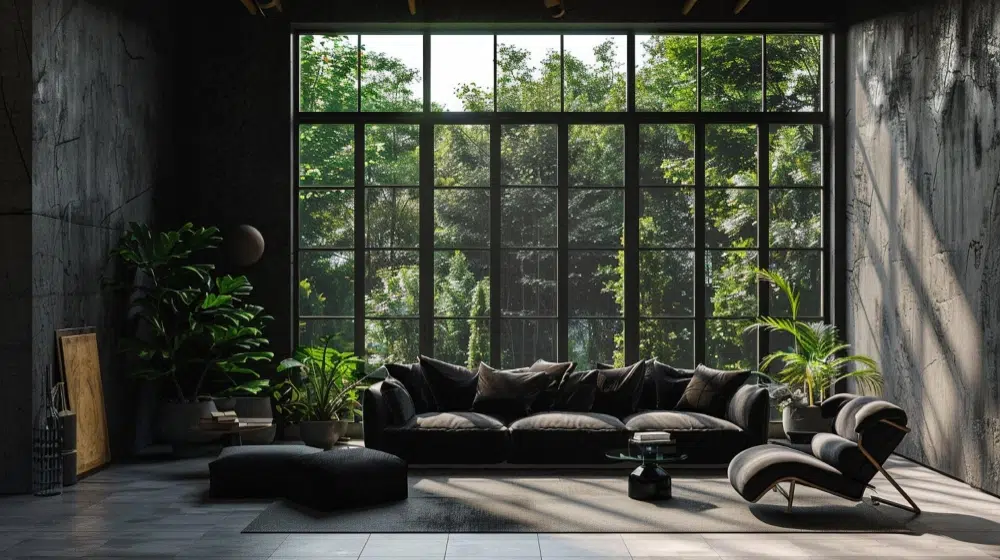
Sunroom Cost in 2026: $40K to $80K Typical Range for NC Homeowners
A sunroom in the Cary–Raleigh area typically runs $40,000 to $80,000 for a quality three-season or four-season build. Smaller three-season builds can land closer to $30,000; large custom or glass-enclosed builds can exceed $150,000. This guide breaks the price down by type, by size, and by what is actually driving the number on your quote, from a Triangle-based general contractor who quotes sunroom projects every month.
If you have been pricing a sunroom and getting wildly different answers from different contractors, that is normal. Sunroom pricing varies more than almost any other addition because the same square footage can be three-season vinyl-frame, four-season insulated, or full custom, and all three get called “a sunroom.”
Quick Answer: How Much Does a Sunroom Cost?
Most sunrooms cost $40,000 to $80,000 for a quality three-season or four-season build. Here is the breakdown:
| Sunroom type | Typical cost range |
| Three-season sunroom | $30,000 to $55,000 |
| Four-season sunroom | $55,000 to $85,000 |
| Custom / glass-enclosed | $80,000 to $150,000 |
| Per square foot (any type) | $250 to $450 |
Typical build time runs 4 to 8 weeks from permit to final walkthrough.
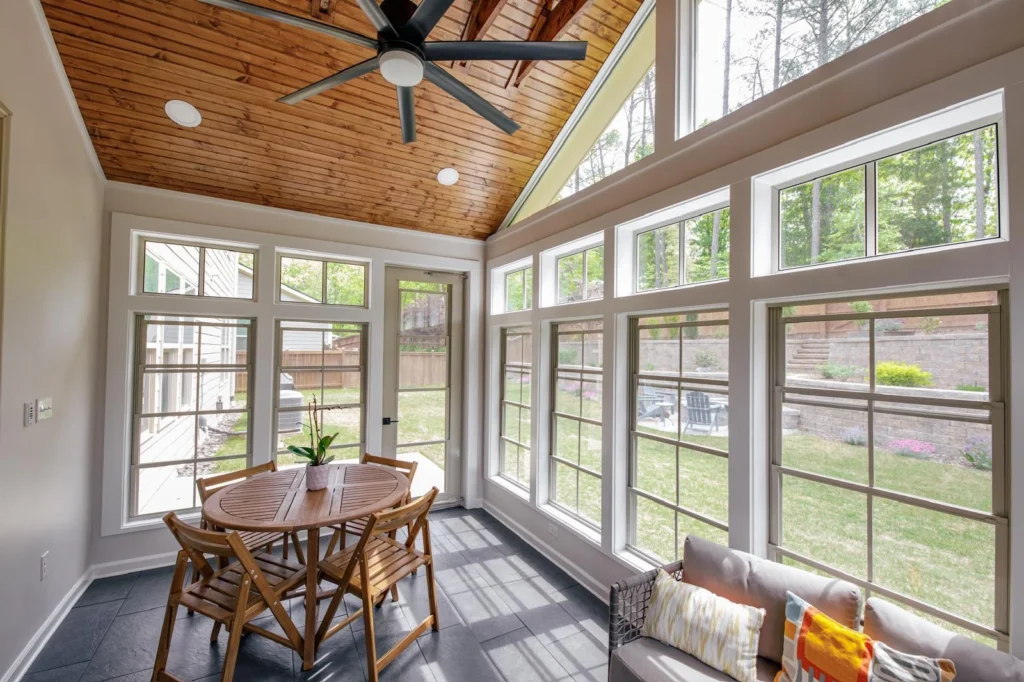
Sunroom Cost by Type
Three-Season Sunroom: $30,000 to $55,000
A three-season sunroom is built for spring, summer, and early fall. It uses large windows, minimal insulation, and no dedicated HVAC, which keeps both the build time and the budget down relative to a year-round room. Within the range, price moves with window quality, frame material, and how the roof ties into the existing house. This is the right fit for a homeowner who wants a bright sitting area for most of the year and is not trying to use the space in January.
Four-Season Sunroom: $55,000 to $85,000
A four-season sunroom is engineered for year-round use: insulated walls, Low-E glazing, and a dedicated heating and cooling source, usually a mini-split. It integrates with the main house as conditioned living space rather than a seasonal retreat, which is why it carries a higher price than a three-season build of the same footprint. The biggest cost drivers within the range are the glazing package and the HVAC tie-in.
Custom or Glass-Enclosed Sunroom: $80,000 to $150,000
Custom sunrooms — sometimes called solariums or all-season conservatories — go beyond the standard four-season build with vaulted or curved ceilings, glass-only walls, integrated roof tie-ins, and sometimes kitchen or bath rough-in. They are built more like a full addition: complete insulation envelope, dedicated HVAC, an electrical service upgrade, and a code-rated foundation. They function as primary living space year-round and add the most resale value of the three types.
Sunroom Cost by Size
Sunroom price scales nonlinearly with square footage. Foundation, roof tie-in, and electrical add fixed costs that do not double when the floor plate doubles. Here is what each common size typically runs for a quality build in the Triangle area:
| Size | Square feet | Typical cost (three-season / four-season) |
| 10×10 | 100 sq ft | $30,000 to $50,000 |
| 12×12 | 144 sq ft | $40,000 to $65,000 |
| 14×16 | 224 sq ft | $55,000 to $90,000 |
| 16×20 | 320 sq ft | $75,000 to $130,000 |
| 20×20 | 400 sq ft | $100,000 to $175,000 |
These are typical ranges for AG-CM’s project mix. Actual quotes vary with site access, foundation type, and whether the sunroom ties into an existing roofline or stands as a new structure.
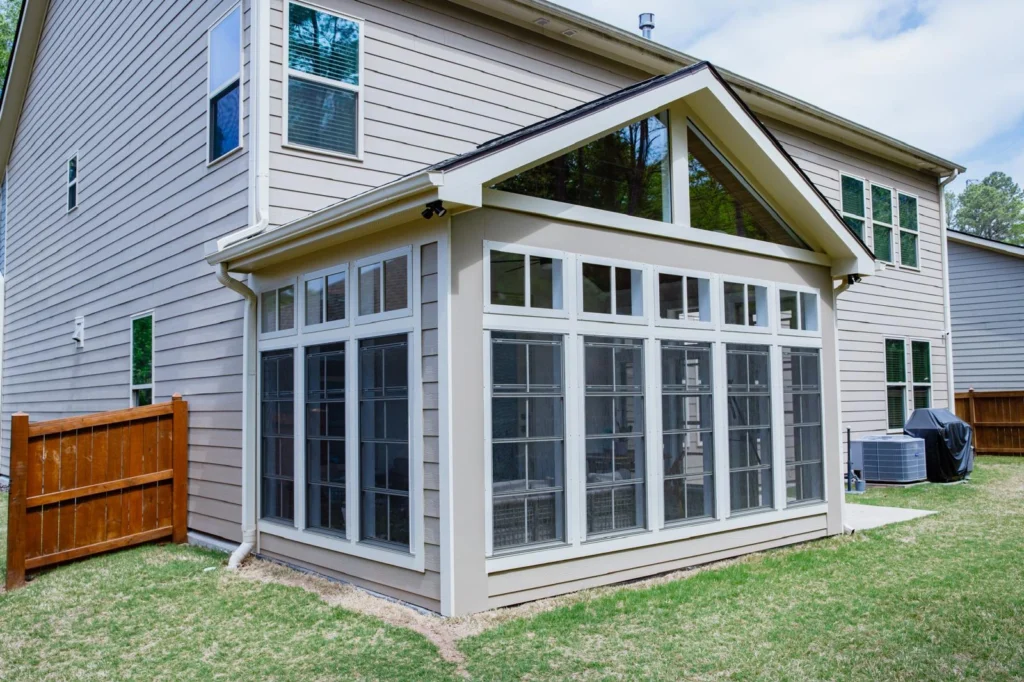
Sunroom Cost Per Square Foot
Sunrooms typically run $250 to $450 per square foot, with three-season builds at the lower end and fully conditioned four-season builds at the upper end. Custom glass-enclosed sunrooms with vaulted ceilings or kitchen rough-in routinely exceed $500 per square foot.
For comparison, a standard home addition in the Triangle runs roughly $200 to $350 per square foot. Sunrooms cost more per foot because of the glazing: high-performance Low-E windows are the single most expensive material in the build.
Three-Season vs. Four-Season: Which Is Worth It?
| Factor | Three-season | Four-season |
| Usable months | Spring through fall | Year-round |
| Insulation / HVAC | Minimal, no HVAC | Full envelope + dedicated HVAC |
| Counts as livable sq ft | No | Yes, if built to code |
| Typical cost | $30K–$55K | $55K–$85K |
| Resale return | Lower | Higher |
The decision usually comes down to one question: do you want the room in winter? If yes, the four-season premium pays back in daily use and in appraised square footage. If the space is for three seasons of relaxing and entertaining, a three-season build delivers the same daylight for meaningfully less.
What Affects the Cost of Building a Sunroom
The final price is shaped by a handful of choices, not just square footage.
Size and Layout
Room size has the biggest single impact. A 100 sq ft layout costs far less than a 250 sq ft design because of added foundation, framing, and roofing. Tall ceilings, long window walls, and angled corners all push the number up.
Materials and Window Choices
Glazing moves the budget fastest. Double-pane Low-E windows cost more but are non-negotiable in a four-season build. Frame material matters too: vinyl is the economical option, aluminum is light and strong, wood reads warm but needs maintenance.
Electrical Work and Climate Control
Outlets, lighting, and a mounted TV all add electrical scope. Climate control is the bigger lever: a mini-split keeps the room comfortable year-round but raises both material and labor cost. Three-season rooms skip this to keep the build lean.
Roofing and Tie-In Complexity
A shed roof is the economical option; a gable that matches the existing rooflines costs more in framing and labor. Where the new roof meets the existing house is one of the highest-skill parts of the build, and the place where hidden structural work is most often discovered.
Foundation and Site Prep
A slab is the most economical foundation; pier-and-beam or a deck tie-in changes the number. Site access, grade, and drainage all factor in before the first wall goes up.
Permits for a Sunroom in Wake County and the Triangle
Any sunroom build in Cary, Raleigh, Apex, Morrisville, or anywhere in Wake County requires a building permit, because it involves new structural framing, electrical, and roofing. Adding HVAC or a full insulation envelope also triggers a mechanical permit. Permit timelines vary with scope: straightforward builds tend to clear in a couple of weeks, while builds with significant structural or mechanical work can take longer. A licensed general contractor submits the permit package and manages the inspections, so this is not paperwork the homeowner handles.
Does a Sunroom Add Home Value?
A quality sunroom returns a meaningful share of its cost at resale, and how much depends on the type. Three-season sunrooms typically return 40 to 50 percent of the build cost. Four-season sunrooms that count as livable square footage on the appraisal return 50 to 60 percent. Custom glass-enclosed builds, which add the most conditioned square footage, sit at the top of that band.
The financial return is only half the story. The reason most homeowners cite for going ahead is the daily use of the space, not the appraisal line.
Sunroom vs. Screened Porch: When Each Makes Sense
A screened porch costs roughly half what a comparable sunroom costs — $40,000 to $60,000 for a quality build in the Triangle — because it skips insulation, HVAC, and high-performance glazing. The trade-off: a screened porch is comfortable spring through fall but not in winter, and it does not count as livable square footage on a resale appraisal.
Choose a sunroom if you want year-round use, the resale bump, and a space that can serve as a home office, dining room, or guest room. Choose a screened porch if you primarily want a bug-free outdoor space and are not planning to use it in January. See AG-CM’s screened porch cost guide for full pricing detail.
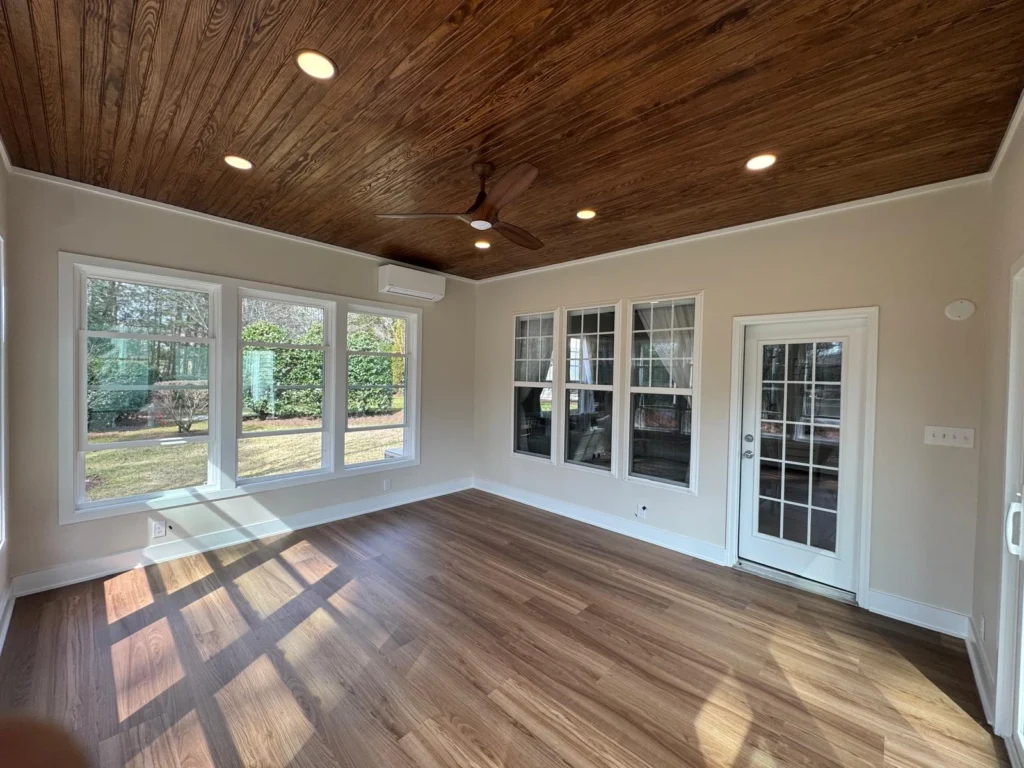
Why Choose AG Construction Management for Your Sunroom
AG Construction Management is a licensed North Carolina general contractor (License #100043) based in Cary, serving the Triangle for residential additions including sunrooms. Three things make AG-CM a fit for a sunroom project specifically:
- Fixed-scope, fixed-timeline contracts. You get one number, one date, and a written schedule before framing starts. Change orders only happen for structural surprises, never for design indecision.
- A long-term trade-partner network. The same framing, electrical, HVAC, painting, and cabinetry crews work on every AG-CM project. Same crews, same standards, no rotating subs.
- Triangle-only service area. Cary, Raleigh, Apex, Morrisville, Durham, Chapel Hill, and Holly Springs. Every project is close to the Cary office, not stretched across the state.
AG-CM is a member of the NC and national Home Builders Associations. If you are weighing a larger project, see how we approach whole-home remodeling, or review scope on home additions. When you are ready, our sunroom contractors in Cary, NC can walk you through options and pricing for your home.
Frequently Asked Questions
How do I keep a sunroom project on budget?
The four biggest budget killers on sunroom builds are scope changes after framing starts, late-stage finish selections, undiscovered structural work at the roof tie-in, and switching contractors mid-project. To stay on budget: lock the scope and finish materials before demo, get a fixed-bid contract from a licensed general contractor, and do not move the project’s footprint after the foundation is set.
Does a sunroom count as square footage?
It depends on the build. Only insulated, climate-controlled four-season rooms that meet local codes count as livable square footage on an appraisal. Three-season sunrooms and screened porches generally do not qualify.
Is a sunroom worth the investment?
Most homeowners see a return on quality sunroom builds. Three-season sunrooms typically return 40 to 50 percent of cost at sale; four-season sunrooms that count as livable square footage return 50 to 60 percent. The non-financial return, daily use of the space, is what most homeowners cite as the deciding factor.
How long does it take to build a sunroom?
A typical sunroom build runs 4 to 8 weeks from permit issuance to final walkthrough. Three-season builds land closer to 4 to 5 weeks; four-season builds run 6 to 8 weeks; custom or glass-enclosed sunrooms with structural roof tie-ins can run 10 to 12 weeks.
Do I need a permit to build a sunroom in Wake County?
Yes. Any sunroom build in Cary, Raleigh, Apex, Morrisville, or anywhere in Wake County requires a building permit because it involves new structural framing, electrical, and roofing. Adding HVAC or full insulation also triggers a mechanical permit.
Does a four-season sunroom add square footage to my home?
Yes, if the sunroom is fully insulated, climate-controlled, and built to code as conditioned space, it counts as livable square footage on a home appraisal. Three-season sunrooms and screened porches generally do not count toward livable square footage.

Comments are closed